
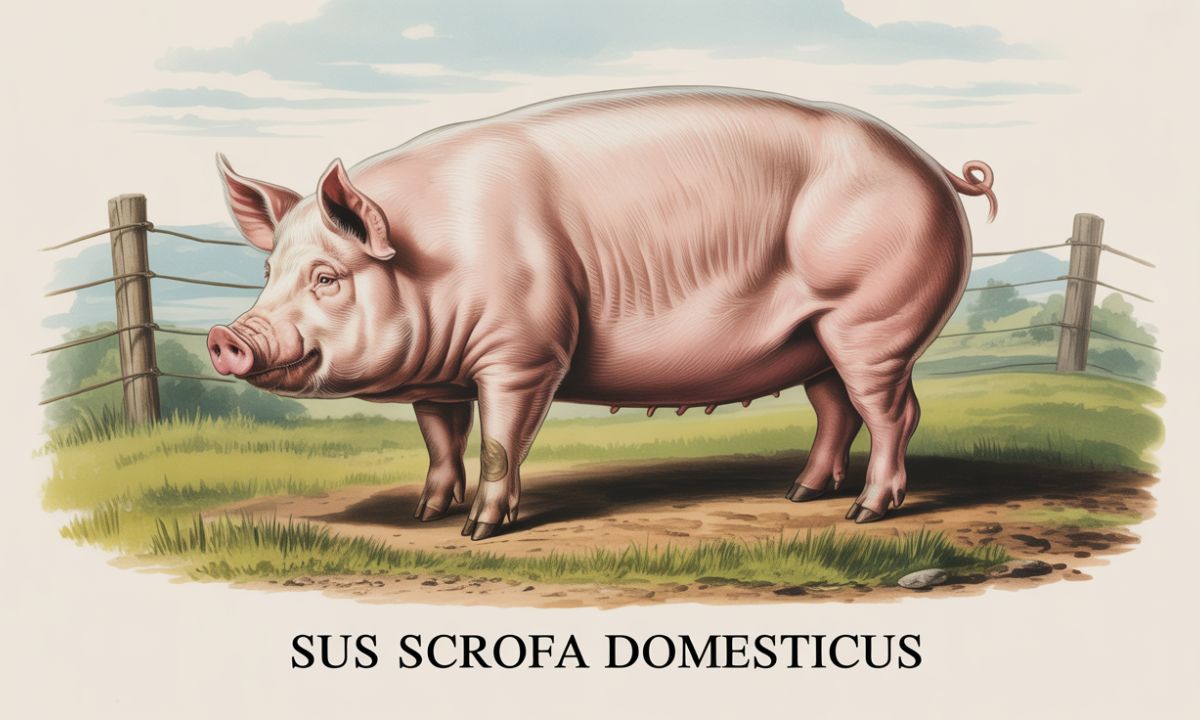

Pigs have been companions to humans for thousands of years now. These intelligent animals play crucial roles in agriculture and food production. Understanding their scientific classification helps us appreciate their biological significance better. The scientific name for pig reveals important details about their evolution.
Every living creature on Earth has a unique scientific identifier. This naming system helps scientists communicate clearly across different languages worldwide. When we learn the scientific name for a pig, we understand. The classification connects domestic pigs to their wild boar ancestors clearly.
What is the Scientific Name for Pig?
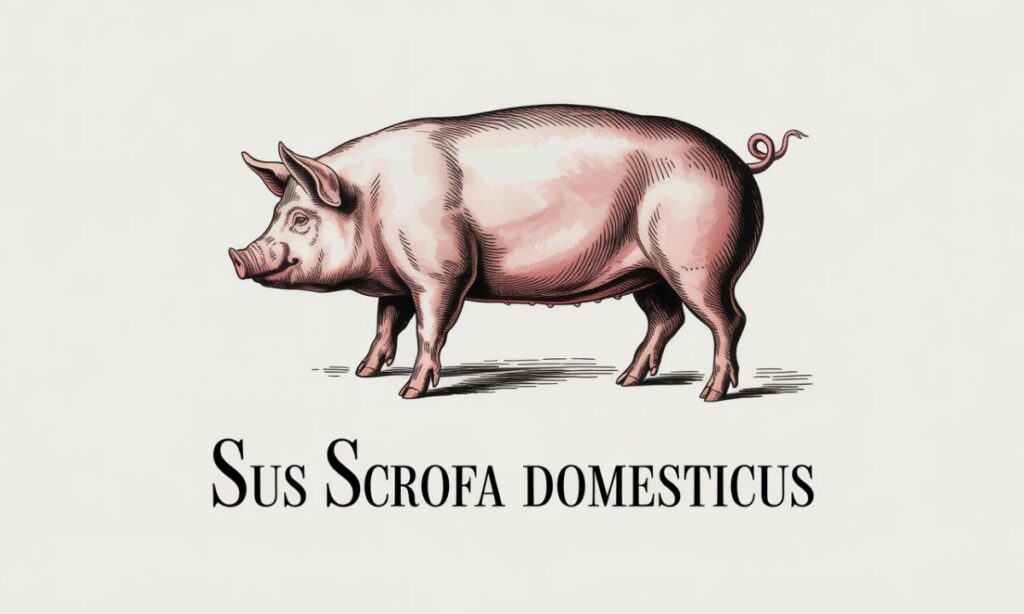
The scientific name for pig is Sus scrofa domesticus worldwide. This Latin-based name identifies the domestic pig species used everywhere. Scientists and researchers use this name to avoid confusion completely. The classification shows that pigs belong to the Sus genus naturally.
Wild boars share the same species name as domestic pigs today. The only difference is the subspecies designation domesticus for farm pigs. This naming convention shows their close evolutionary relationship throughout history. Understanding the scientific name for a pig helps in biology.
Scientific Name: Sus scrofa domesticus
Scientific Classification of Pigs
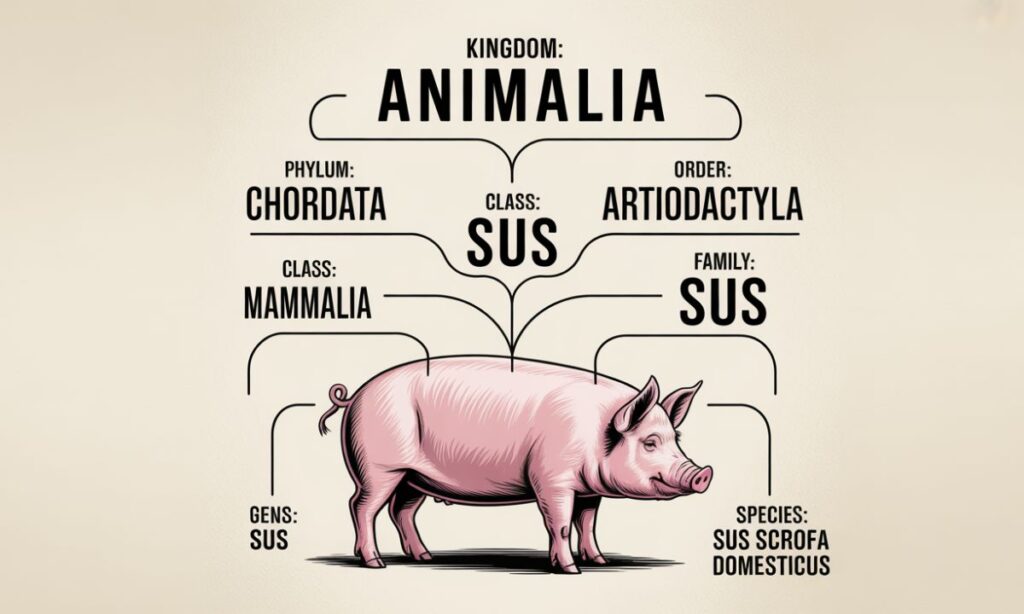
Pigs follow a hierarchical classification system like all living organisms. Each level of taxonomy provides specific information about its biological relationships. The scientific name for a pig fits within this structured system. This classification helps scientists study pigs more effectively in research worldwide.
Taxonomic ranks organize life from broad kingdoms to specific subspecies. Every rank tells us something important about pig characteristics and evolution. The system ensures consistent identification across all scientific fields globally. Learning what is the scientific name for pig is requires understanding taxonomy.
| Taxonomic Rank | Classification |
| Kingdom | Animalia |
| Phylum | Chordata |
| Class | Mammalia |
| Order | Artiodactyla |
| Family | Suidae |
| Genus | Sus |
| Species | Sus scrofa |
| Subspecies | Sus scrofa domesticus |
Difference Between Domesticated Pigs and Wild Boars
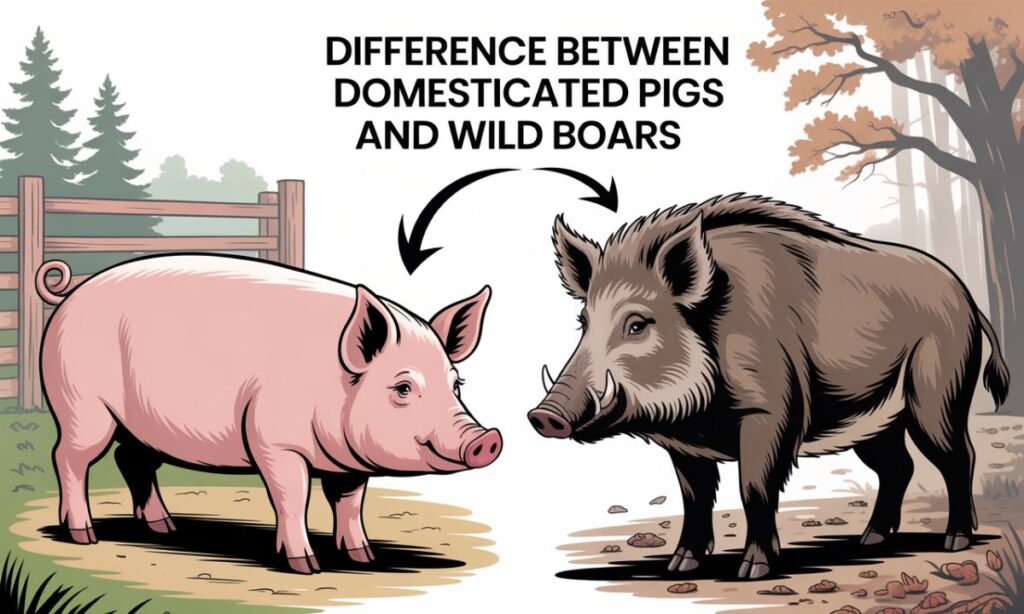
Domesticated pigs evolved from wild boars through selective breeding practices. Humans began domesticating these animals approximately nine thousand years ago. The scientific name for pig reflects this domestication with a subspecies designation. Both share the same species but differ in behavior and appearance.
| Feature | Domesticated Pig | Wild Boar |
| Scientific Name | Sus scrofa domesticus | Sus scrofa |
| Body Size | Larger, heavier build | Leaner, more muscular |
| Coat | Sparse hair, various colors | Thick, coarse bristles |
| Behavior | Docile, farm-adapted | Aggressive, highly territorial |
| Habitat | Farms, controlled environments | Forests, grasslands, wetlands |
| Reproduction | Year-round breeding | Seasonal breeding patterns |
| Tusks | Small or removed | Large, prominent, sharp |
Why is the Pig Scientific Name Important?
Scientific names eliminate confusion when discussing animals across different languages. Common names vary greatly between regions and countries around the world. The scientific name for a pig remains constant everywhere universally. This standardization is crucial for international research and agricultural collaboration.
Researchers studying pig genetics need precise identification for their work. The binomial nomenclature system ensures everyone discusses the same species. What is the scientific name for pig that becomes important in trade? Agricultural policies and veterinary medicine depend on accurate species identification.
Key importance includes:
- Universal communication across all languages and scientific disciplines worldwide
- Precise identification for research, breeding programs, and medical studies
- Clear distinction between wild and domesticated pig populations globally
Understanding the Pig Taxonomy
Taxonomy organizes all living things into hierarchical categories systematically. Each taxonomic level reveals specific information about organism relationships and characteristics. The scientific name for pig sits within this comprehensive classification system. Understanding taxonomy helps us see how pigs relate to animals.
Pigs belong to the order Artiodactyla with even-toed ungulate mammals. This order includes deer, cattle, camels, and many other species. The Suidae family contains all pig-like mammals, including warthogs worldwide. Knowing what is the scientific name for a pig is improves understanding.
Taxonomy reveals:
- Evolutionary relationships between domestic pigs and wild boar ancestors
- Shared characteristics with other mammals in the same classification
- Biological traits are inherited through millions of years of natural evolution
Pig Anatomy and Biological Adaptations
Pigs possess unique anatomical features that suit their omnivorous lifestyle. Their bodies have evolved for rooting, foraging, and surviving environments. The scientific name for a pig connects to these adaptations. Physical characteristics make pigs highly efficient at finding and processing food.
These mammals have specialized organs and systems for their needs. Their large heads contain powerful jaw muscles for crushing food. What is the scientific name for pig in relation to biology? Adaptations help pigs thrive in both wild and domestic settings.
Digestive System:
- Strong jaws with 44 teeth for grinding plant and animal matter
- Simple stomach unlike ruminants, efficient omnivorous digestion process
- Long intestinal tract for extracting maximum nutrients from varied foods
Respiratory System:
- Small lungs relative to body size, susceptible to respiratory diseases
- Limited panting ability affects heat regulation during hot weather conditions
- Efficient oxygen processing supports active foraging and social behaviors
Sensory Systems:
- Exceptional sense of smell with over 1,100 olfactory receptor genes
- Panoramic vision approximately 310 degrees for detecting predators and food
- Sensitive hearing for communication and environmental awareness capabilities are constantly
Limbs and Movement:
- Four hoofed toes on each foot with two bearing weight
- Strong legs support a heavy body weight during daily activities
- Adapted for rooting behavior and walking long distances foraging naturally
Kingdom → Species (Animalia, Chordata, etc.)
The taxonomic hierarchy begins with the broadest category, called the Kingdom. Each subsequent level becomes more specific about organism characteristics. The scientific name for the pig appears at the species level. This system organizes all life on Earth into understandable categories.
Every level provides important biological information about the organism studied. Moving down the hierarchy narrows the classification to specific traits. What is the scientific name for a pig becomes clear. The subspecies level distinguishes domestic pigs from wild boar populations.
| Taxonomic Level | Classification & Description |
| Kingdom: Animalia | Multicellular organisms that consume organic material for energy and growth |
| Phylum: Chordata | Vertebrate animals possessing a notochord and dorsal nerve cord structure |
| Class: Mammalia | Warm-blooded animals with hair, mammary glands, and live birth characteristics |
| Order: Artiodactyla | Even-toed ungulates with hooves and specialized digestive systems for herbivory |
| Family: Suidae | Pig family including domestic pigs, wild boars, warthogs, and relatives |
| Genus: Sus | True pigs are found across Europe, Asia, and have been introduced to the Americas |
| Species: Sus scrofa | Wild boar species from which all domestic pigs descended historically |
Common Names for Pigs
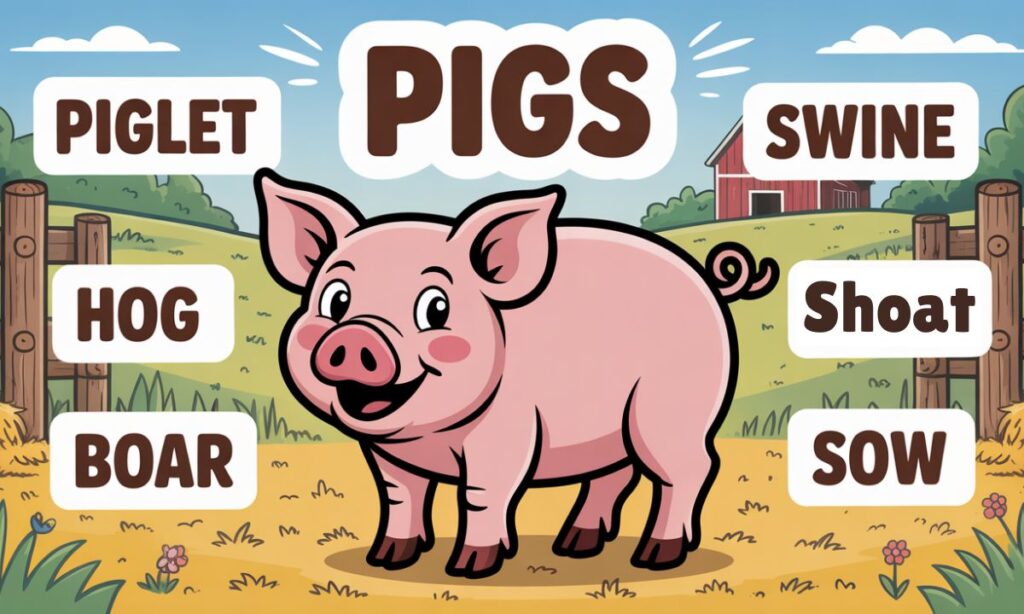
Pigs are known by various names depending on age and gender. These common terms vary across different cultures and farming communities. The scientific name for a pig remains constant despite terminology. Regional dialects and languages create numerous informal names for pigs.
- Pig: General term for any member of the swine family
- Swine: Formal or collective term for all pig species
- Hog: Large, mature pig typically weighing over 120 pounds
- Boar: Adult male pig used for breeding purposes
- Sow: An Adult female pig that has given birth
- Gilt: Young female pig that hasn’t reproduced yet
- Piglet: Baby pig from birth to the weaning stage
- Shoat: Young pig recently weaned from its mother
- Porker: Young pig raised specifically for meat production
- Barrow: Castrated male pig raised for meat purposes
- Runt: Smallest piglet in a litter, often weak
- Farrow: Term for a sow giving birth to piglets
Swine Evolution and History of Pigs
Pigs evolved from ancient pig-like mammals millions of years ago. The Sus genus appeared in Eurasia during the Miocene epoch. The scientific name for pig connects to this evolutionary history. Wild boars spread across Europe, Asia, and North Africa naturally.
Domestication began approximately 9,000 years ago in multiple locations independently. Archaeological evidence shows pig domestication in the Near East first. Chinese populations domesticated local wild boars around the same time. The scientific name for a pig reflects this domestication.
Humans selectively bred pigs for desirable traits over many generations. This process created numerous breeds adapted to different climates worldwide. European colonizers introduced domestic pigs to the Americas during exploration. The scientific name for a pig shows this shared ancestry.
Importance of Pigs in Agriculture
Pigs represent one of the most important livestock animals globally. Farmers raise approximately 1.5 billion pigs annually for various purposes. The scientific name for pigs identifies these agricultural animals scientifically. Pork production supports millions of livelihoods worldwide in farming communities.
These animals convert feed into protein more efficiently than cattle. Pigs reach market weight quickly, providing fast returns for farmers. What is the scientific name for a pig that matters in trade? Agricultural research continues to improve pig genetics and farming practices constantly.
Agricultural Benefits:
- A high reproductive rate produces many offspring per breeding cycle
- Efficient feed conversion creates maximum meat from minimum resources
- Adaptable to various farming systems from intensive to free-range
- Multiple product sources including meat, leather, and medicinal compounds
- Quick growth rates allow faster market turnover than cattle
- An omnivorous diet reduces feed costs compared to a strict herbivore
Behavior and Characteristics of Pigs
Pigs are highly intelligent animals comparable to dogs in cognition. They form complex social structures and communicate through various vocalizations. The scientific name for a pig doesn’t reflect their intelligence. These animals recognize individuals, solve problems, and experience emotions deeply.
Social behavior includes forming groups of related sows and offspring. Wild pigs live in communities while maintaining clear hierarchies naturally. What is the scientific name for pig that relates to behavior? Domestic pigs retain many instincts despite thousands of breeding.
- Intelligence rivals dogs and young children in problem-solving tests
- Strong sense of smell used for finding food underground
- Social animals form lasting bonds with herd members
- Communication through over 20 different vocal sounds daily
- Wallowing in mud regulates body temperature effectively naturally
- Memory allows recognition of individuals after long separations
- Natural rooting behavior is essential for foraging and comfort
Lifespan and Growth Stages of Pigs
Pigs progress through distinct life stages from birth to maturity. Domestic pigs typically live 15-20 years under optimal conditions. The scientific name for pig applies throughout all life stages. Wild boars may live shorter lives due to predation pressure.
Piglets are born after approximately 114 days of gestation. They grow rapidly during the first months of life. What is the scientific name for a pig stays consistent. Growth rates vary depending on breed and farming practices employed.
Growth Stages:
- Piglet (Birth – 8 weeks): Nursing period requiring mother’s milk and protection constantly
- Weaner (8 weeks – 10 weeks): Transitioning from milk to solid feed gradually
- Grower (10 weeks – 20 weeks): Rapid weight gain and muscle development phase
- Finisher (20 weeks – 24 weeks): Final growth stage before reaching market weight
- Adult (6 months+): Sexual maturity and breeding capability are achieved fully.
- Senior (8+ years): Older pigs with declining reproductive capacity gradually
Different Breeds of Pigs
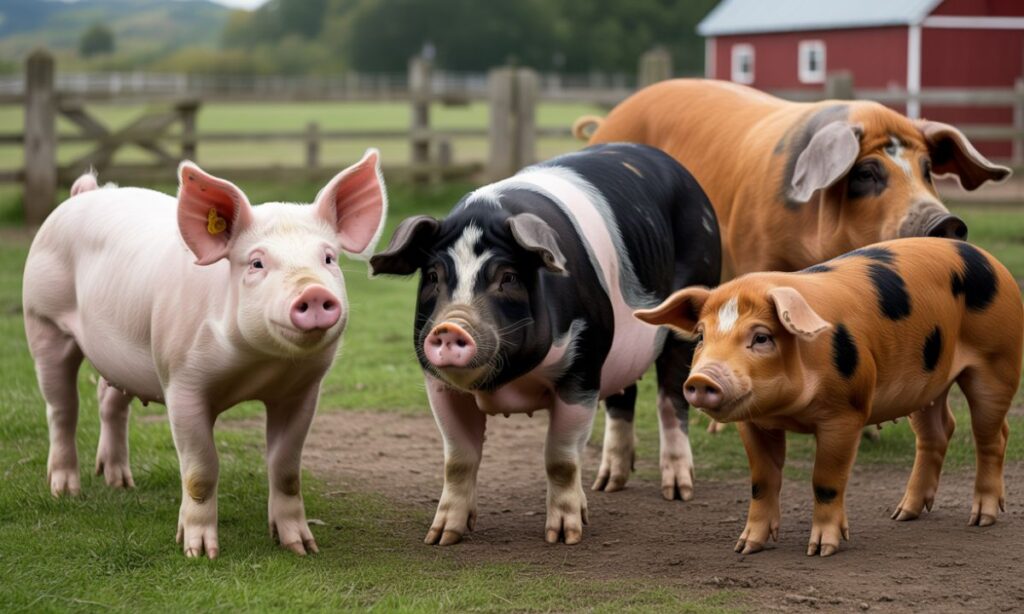
Farmers have developed over 600 distinct pig breeds worldwide. Each breed has specific characteristics suited for different purposes. The scientific name for a pig applies to all breeds. Selective breeding created varieties adapted to climates and production goals.
| Breed Name | Origin | Description |
| Yorkshire | England | Large white pigs are known for excellent meat production and mothering |
| Duroc | United States | Red-colored breed with fast growth and high-quality marbled meat |
| Berkshire | England | Black pigs with white points, prized for flavorful pork |
| Hampshire | United States | Black with white belt, lean meat and good muscle development |
| Landrace | Denmark | White breed with long bodies, excellent for bacon production |
| Chester White | Pennsylvania | All-white pigs are known for their durability and mothering abilities |
| Poland China | Ohio | Black with white markings, good meat quality and growth |
Diet: What Do Pigs Eat in the Wild and on Farms?
Wild Pig Diet
Wild boars are opportunistic omnivores eating whatever is available seasonally. Their diet varies greatly depending on habitat and food availability. The scientific name for pig identifies these wild omnivores scientifically. Rooting behavior helps them find underground food sources efficiently.
- Roots, tubers, and underground plant parts are dug systematically
- Fruits, nuts, acorns, and berries during abundant seasons
- Insects, worms, small reptiles, and eggs when available
- Carrion and small mammals are occasionally used as protein sources
- Grasses, leaves, and tender shoots throughout the growing seasons
Farm Pig Diet
Domestic pigs receive carefully formulated feeds for optimal growth. Farmers balance nutrition to maximize meat production and health. What is the scientific name for a pig matters less. Modern pig nutrition focuses on protein, carbohydrates, and minerals.
- Commercial feed pellets formulated with grains and protein sources
- Corn and soybeans form the base of most feeds
- Vitamin and mineral supplements ensure complete nutrition daily
- Fresh water access is essential for digestion and health
- Some farms supplement with vegetables and food waste safely
Proper nutrition ensures healthy growth and disease resistance naturally. Balanced diets improve meat quality and farming efficiency significantly. The scientific name for a pig doesn’t change dietary needs. Understanding nutrition helps farmers raise healthier, more productive animals consistently.
Pig Conservation and Wild Population
Wild boar populations face various challenges across their natural range. Habitat loss threatens many wild pig species around the world. The scientific name for pig includes both domestic and wild. Conservation efforts focus on protecting natural habitats and genetic diversity.
Some wild pig species are endangered due to hunting pressure. Feral pigs create ecological problems when introduced to new environments. What is the scientific name for a pig that helps conservation? Managing wild populations requires balancing ecological impacts with species preservation.
Pigs in Culture, Symbolism, and Global Traditions

Pigs hold significant cultural meaning in societies around the world. Different cultures have historically viewed these animals through various symbolic lenses. The scientific name for a pig remains consistent across cultures. Religious and cultural traditions shape attitudes toward pigs dramatically everywhere.
Cultural Examples:
- China: Symbol of prosperity, wealth, and good fortune in the zodiac
- Islamic and Jewish traditions: Pork consumption is forbidden by religious law
- European festivals: Celebrated in carnivals and harvest celebrations historically
- Pacific Islands: Important for ceremonial feasts and status symbols
- American culture: Associated with farming, bacon, and barbecue traditions
In ancient Rome, pork was considered the finest meat. Medieval Europe celebrated pigs in artwork and festivals regularly. The scientific name for pig doesn’t capture cultural significance. Modern society views pigs differently depending on regional customs.
Fun Facts About Pigs
Pigs possess many fascinating characteristics that surprise most people. These intelligent animals have capabilities beyond common expectations. The scientific name for a pig is just one interesting fact. Learning about pig behavior reveals their remarkable abilities consistently daily.
- Pigs cannot sweat effectively so mud wallowing cools them
- They have excellent long-term memory, recognizing places and individuals
- Piglets learn their names within weeks of birth consistently
- Pigs can run 11 miles per hour at top speed
- Their sense of smell is more sensitive than dogs.
- Newborn piglets recognize their mother’s unique vocal calls immediately
- Pigs demonstrate self-awareness passing mirror recognition tests successfully
- They dream during REM sleep like humans do regularly
- Pigs have been used to hunt truffles for centuries
- A group of pigs is called a drift or drove
Last Words
Understanding the scientific name for pig enhances our appreciation of animals. Sus scrofa domesticus represents thousands of years of domestication history. These remarkable creatures contribute significantly to human agriculture and culture. Learning what is the scientific name for a pig deepens knowledge.
Pigs deserve recognition for their intelligence and biological significance worldwide. Their scientific classification reveals evolutionary relationships and biological heritage clearly. The scientific name for a pig connects domestic animals worldwide. Appreciating pigs means understanding both their science and their value.
Frequently Asked Questions
What is the scientific name for pig?
The scientific name for pig is Sus scrofa domesticus for breeds.
What is the scientific name for a pig used globally?
Scientists worldwide use Sus scrofa domesticus as the official classification.
What is the scientific name for guinea pig species?
Guinea pigs are Cavia porcellus, completely different from true pigs.
Is sus the scientific name for a pig actually?
Yes, Sus is the genus name within the classification system.
What is a scientific name for a pig exactly?
A scientific name for a pig is Sus scrofa domesticus officially.
What is the scientific name for wild pig populations?
Wild pigs are classified as Sus scrofa without the domesticus.
Why is the scientific name for pig important today?
It ensures universal identification across all languages and research fields.
What is the scientific name for a Hampshire pig?
Hampshire pigs also use Sus scrofa domesticus like all breeds.
Don’t look up the scientific name for pig meme?
The meme jokes about “sus” meaning suspicious in slang language.
What is the scientific name for pig pronunciation exactly?
It’s pronounced “Soos SKRO-fuh doh-MES-tih-kus” in scientific Latin.

David is a naming expert with 2 years of experience at NamesSelections.com, specializing in name meanings, team names, baby names, and unique name ideas. His insights guide readers to choose meaningful and powerful names for every occasion.