


Scientific name of dog is recognized worldwide as Canis lupus familiaris. This name helps scientists identify and classify dogs across different regions. Understanding dog taxonomy reveals their fascinating connection to wild wolf ancestors. Every domestic dog breed shares this same scientific classification today.
Dogs have lived alongside humans for over one hundred thousand years. Their domestication journey transformed wolves into the loyal household companions we know. The scientific name of a dog reflects this evolutionary relationship clearly. Modern genetic studies confirm that dogs descended from ancient gray wolf populations.
Learning about the scientific name of dog opens doors to understanding biology. This classification system helps veterinarians, researchers, and animal enthusiasts communicate effectively. Whether you call them pets or working animals, their taxonomy remains consistent. The binomial nomenclature system makes identifying species simple and universally understood.
What is the Scientific Name of Dog?

The scientific name of dog follows the universal binomial nomenclature system worldwide. Scientists use Canis lupus familiaris to identify all domestic dog breeds. This Latin-based naming convention eliminates confusion across different languages and cultures. Every dog from tiny Chihuahuas to massive Great Danes shares an identical classification.
What is the scientific name of a dog remains constant globally. The name connects domestic dogs directly to their gray wolf ancestors. Taxonomists carefully studied canine evolution before assigning this specific scientific designation. This classification helps researchers track genetic relationships among various canine species.
| Common Name | Scientific Name |
| Domestic Dog | Canis lupus familiaris |
| Gray Wolf | Canis lupus |
Explanation of the Dog Scientific Name
The scientific name of domestic dog consists of three distinct Latin terms. Each part reveals important information about the animal’s biological classification and ancestry. Understanding these terms helps explain the deep connection between dogs and wolves. Scientists worldwide recognize this naming structure as the standard identification method.
Breaking Down Canis Lupus Familiaris:
- Canis represents the genus including dogs, wolves, jackals, and coyotes
- Lupus identifies the species name shared with gray wolves specifically
- Familiaris distinguishes domesticated dogs from their wild wolf counterparts
- This three-part name shows that dogs are actually a subspecies of wolves
Don’t Miss: Scientific Name Of The Largest Cockroach
Dog Scientific Name Meaning and Etymology

The scientific name of a female dog carries deep historical linguistic roots. Latin served as the universal language of science for many centuries. Each word in Canis lupus familiaris tells part of the domestication story. Ancient Romans used these terms to describe various wild and domestic animals.
Etymology of Each Term:
- Canis: originates from Latin meaning “dog” or any canine animal
- Lupus: comes from the Latin word for “wolf” used in ancient texts
- Familiaris: derives from Latin meaning “household” or “belonging to family”
- Combined: these words literally translate to “household wolf” in English
- Historical use: dates back to Carl Linnaeus’ taxonomic classification system
- Modern applications: remain unchanged since the eighteenth century scientific revolution
Classification of Dogs
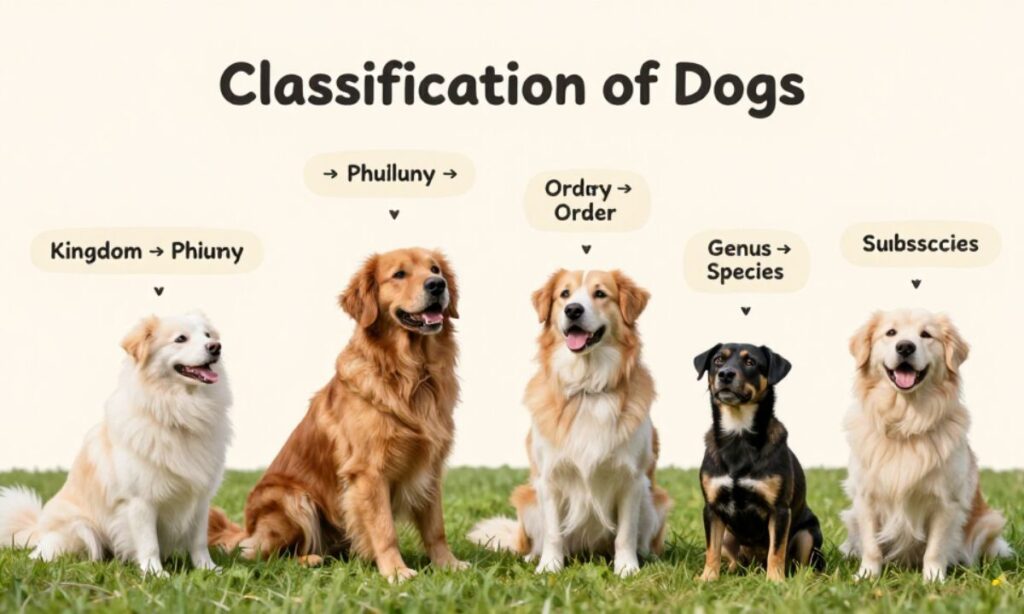
The scientific name of dog fits within a comprehensive hierarchical classification system. Taxonomists organize all living organisms from broad categories to specific subspecies. Dogs belong to the animal kingdom and progress through increasingly specific groups. This system reveals evolutionary relationships between dogs and other related species.
| Taxonomic Rank | Classification |
| Kingdom | Animalia |
| Phylum | Chordata |
| Class | Mammalia |
| Order | Carnivora |
| Family | Canidae |
| Genus | Canis |
| Species | Canis lupus |
| Subspecies | Canis lupus familiaris |
Biological Characteristics That Define Canis Lupus Familiaris
What is the scientific name of the dog that connects to specific biological traits? Domestic dogs display unique physical characteristics that distinguish them from wild canines. Their skeletal structure, dental patterns, and genetic makeup define their scientific classification. These features remained consistent even as humans bred hundreds of different varieties.
Dogs possess forty-two permanent teeth designed for their carnivorous diet originally. Their cardiovascular system supports high energy activities like running and hunting behaviors. Canine skeletal structure includes approximately three hundred twenty individual bones altogether. These biological features link directly to their scientific name and taxonomic position.
The scientific name of the domestic dog reflects their adapted digestive capabilities. Unlike pure carnivores, domestic dogs can digest carbohydrates and varied food sources. Their brain structure shows modifications related to human interaction and social bonding. These evolutionary changes justify their subspecies classification as separate from wild gray wolves.
Don’t Miss: Scientific Name for Pig
Evolution and Domestication of Dogs
The scientific name of the African wild dog differs from domestic dog. Domestication began when ancient wolves approached human settlements seeking food resources. Early humans selected wolves displaying friendly, calm, and cooperative behavioral traits gradually. This process continued over thousands of generations, creating the domestic dog subspecies.
The scientific name of the domestic dog reflects this domestication journey. Genetic studies show domestication occurred between fifteen thousand to forty thousand years ago. Different wolf populations across Europe and Asia contributed to modern dog genetics. Selective breeding accelerated physical and behavioral changes, distinguishing dogs from their wild ancestors.
The scientific name of a domesticated dog represents humanity’s longest animal partnership. Ancient humans bred dogs for hunting, herding, guarding, and companionship purposes. Each generation of selective breeding created more diverse physical appearances and temperaments. Despite extreme variety in modern breeds, all dogs retain identical scientific classification.
Timeline of Dog Domestication:
- 40,000 years ago: Initial wolf domestication possibly begins in Europe or Asia
- 15,000 years ago: Clear archaeological evidence of domestic dogs living with humans
- 10,000 years ago: Dogs spread across multiple continents following human migration patterns
- 5,000 years ago: Selective breeding creates distinct dog types for specific work purposes
- 19th century: Formal dog breed standards established with organized kennel club registries
- 21st century: Over three hundred forty recognized dog breeds exist worldwide today
How Scientists Determine the Scientific Name of a Dog

Genetic Analysis:
Scientists compare DNA sequences between domestic dogs and related wild canine species. Modern genetic testing reveals that dogs share ninety-nine percent genetic similarity with gray wolves.
This close genetic relationship supports their classification as Canis lupus familiaris subspecies. Advanced molecular biology techniques confirm their evolutionary connection beyond any reasonable doubt.
Morphological Examination:
Researchers study physical characteristics including skull shape, body structure, and dental patterns. Domestic dogs display juvenile wolf features even into adulthood through the neoteny process.
These retained juvenile traits distinguish them from fully mature wild wolf populations. Comparative anatomy provides crucial evidence supporting their current taxonomic classification system.
Behavioral Studies:
Scientists observe social behaviors, communication patterns, and cognitive abilities in canine populations. Dogs demonstrate unique human-directed social skills absent in wolf behavior patterns naturally.
Their ability to understand human gestures and commands shows domestication effects clearly. Behavioral research complements genetic and physical evidence in classification determinations effectively.
Historical Documentation:
Taxonomists review centuries of scientific literature describing dog and wolf relationships thoroughly. Carl Linnaeus established the foundation of modern binomial nomenclature in seventeen fifty-eight.
Historical breeding records and archaeological findings support the current classification schemes being used. Scientific consensus maintains that dogs as a distinct subspecies of gray wolves.
Importance of Scientific Naming
What is scientific name of dog that provides universal communication across all languages? Scientists from different countries can discuss canine research without translation confusion problems. The binomial nomenclature system creates consistency in veterinary medicine and biological research. This standardization prevents mistakes when identifying species for medical treatments or conservation.
The scientific name of the wild dog species helps differentiate various canine family members. Common names vary dramatically between regions, causing potential identification errors in research. Latin-based scientific names remain constant regardless of local language or cultural differences. This universal system facilitates international collaboration in animal science and conservation efforts.
Benefits of Using Scientific Names:
- Eliminates confusion caused by multiple common names for the same species
- Provides precise identification for veterinary medicine and pharmaceutical research applications
- Enables accurate communication between international scientists and wildlife conservation organizations
- Reveals evolutionary relationships between different species and subspecies within family groups
- Supports legal documentation for endangered species protection and international trade regulations
- Maintains consistency across scientific literature spanning multiple centuries of biological research
Differences Between Domestic Dogs and Wolves
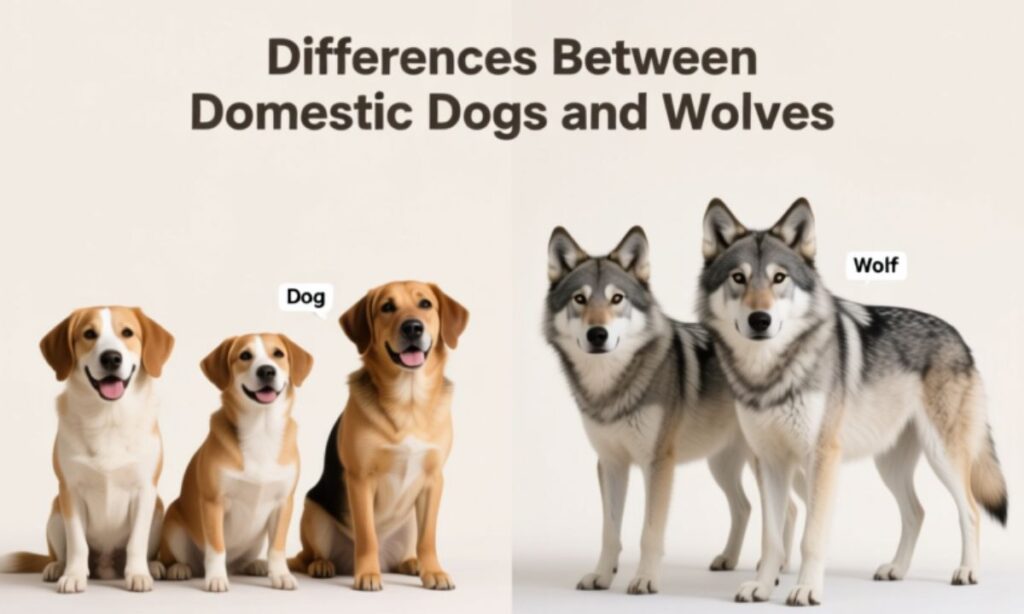
| Characteristic | Domestic Dogs (Canis lupus familiaris) 🐕 | Gray Wolves (Canis lupus) 🐺 |
| Physical Size | Extreme variation from 2 lbs to 200+ lbs depending on breed | Consistent size range 60-180 lbs across wolf populations |
| Skull Shape | Shortened snouts, smaller teeth, and varied skull shapes by breed | Longer snouts, larger teeth, uniform skull structure throughout species |
| Ear Position | Floppy or erect ears, depending on breeding selection | Always erect, triangular ears positioned high onthe head |
| Tail Characteristics | Curled, straight, or docked tails in various positions | Straight tail hanging down, raised when alert or aggressive |
| Coat Patterns | Hundreds of color combinations and textures are possible | Limited natural colors including gray, white, black, and brown variations |
| Reproductive Cycle | Females can breed twice yearly in any season | Females breed once annually during the late winter months only |
| Social Behavior | Bonded to humans, flexible social structure, dependent nature | Pack-oriented, strict hierarchy, independent survival instincts, strong |
| Dietary Adaptations | Can digest starches and carbohydrates efficiently through evolution | Obligate carnivores require a meat-based diet primarily for nutrition |
| Communication | Barking is frequently used for various communication purposes | Rarely bark, rely on howling and body language instead |
| Lifespan | Average 10-13 years with proper care and nutrition | Average 6-8 years in the wild, up to 16 in captivity |
Don’t Miss: Animals Scientific Names
Dog Taxonomy Compared With Other Canidae Species
The scientific name of the prairie dog completely differs as they’re rodents. The Canidae family includes thirty-five species ranging from tiny fennec foxes. Understanding dog taxonomy requires comparing them with their closest living relatives. Each species within Canidae possesses a unique scientific name reflecting its evolutionary paths.
| Species | Scientific Name | Distribution 🌍 | Key Features ⭐ | Conservation Status 🛡️ |
| Domestic Dog | Canis lupus familiaris | Worldwide with humans | Highly variable appearance, domesticated behavior | Not threatened |
| Gray Wolf | Canis lupus | North America, Europe, Asia | Large predator, pack hunter, wild nature | Least concern |
| African Wild Dog | Lycaon pictus | Sub-Saharan Africa | Colorful coat patterns, endangered species | Endangered |
| Red Fox | Vulpes vulpes | Northern hemisphere widespread | Solitary hunter, adaptable omnivore habits | Least concern |
| Coyote | Canis latrans | North and Central America | Medium size, opportunistic diet preferences | Least concern |
| Golden Jackal | Canis aureus | Southern Europe, Asia, Africa | Omnivorous scavenger, vocal communication | Least concern |
Extensively Identified Breeds and Their Origin
What is the scientific name of a female dog remains Canis lupus familiaris? Over three hundred forty distinct dog breeds exist worldwide in modern times. Each breed developed through selective breeding for specific purposes or aesthetic preferences. Despite dramatic physical differences, all breeds share identical scientific classification and ancestry.
The scientific name of the Pomeranian dog matches larger breeds like Great Danes perfectly. Breed development accelerated dramatically during the nineteenth and twentieth centuries in Europe. Dog fanciers created breed standards emphasizing specific physical traits and behavioral characteristics. Modern DNA testing confirms all breeds descended from the same wolf ancestors.
Popular Breeds and Their Historical Origins:
- Labrador Retriever: originated in Newfoundland helping fishermen retrieve nets and catch
- German Shepherd: developed in Germany during the 1890s for herding and protection duties
- Golden Retriever: created in Scotland for retrieving waterfowl during hunting expeditions
- Bulldog: bred in England originally for bull-baiting before becoming companion dogs
- Beagle: has ancient origins in England as a small scent hound for hunting
- Poodle: developed in Germany and France as water retrieving and circus dogs
- Siberian Husky: bred by Chukchi people in Siberia for sled pulling work
- Dachshund: originated in Germany for hunting badgers in underground burrows successfully
Final Words
The scientific name of dog binomial nomenclature is Canis lupus familiaris. This classification connects every domestic dog to their ancient gray wolf ancestors. Understanding dog taxonomy helps us appreciate the remarkable journey of domestication spanning. Scientific naming provides clarity in communication between researchers, veterinarians, and animal enthusiasts.
What’s the scientific name of a dog remains consistent across all breeds. From tiny toy breeds to giant working dogs, their classification never changes. This universal naming system transcends language barriers and cultural differences in identification. The relationship between dogs and humans represents one of nature’s most successful.
Write the scientific name of dog as Canis lupus familiaris in any scientific context. Dogs continue evolving alongside humans as our most faithful and adaptable companions. Their taxonomy tells the story of cooperation, selection, and mutual benefit. Learning about the scientific name of the companion dog is Canis lupus familiaris, enriches our understanding of biology and domestication history profoundly today.
Frequently Asked Questions
What is the scientific name of dog?
The scientific name of dog is Canis lupus familiaris, representing domestic dogs as a subspecies of gray wolves universally.
What is the scientific name of a dog?
Canis lupus familiaris is the scientific name used for all domestic dog breeds, regardless of size or appearance.
What is the scientific name of the dog?
The scientific name of the dog follows binomial nomenclature as Canis lupus familiaris, as established by Carl Linnaeus originally.
What is the scientific name of domestic dog?
Domestic dogs are scientifically classified as Canis lupus familiaris, distinguishing them from wild wolf populations through domestication.
What is the scientific name of a female dog?
Female dogs share the same scientific name as males: Canis lupus familiaris, with no gender distinction needed.
What is the scientific name of African wild dog?
African wild dogs have a different scientific name: Lycaon pictus, making them a separate species entirely.
What is scientific name of dog in binomial nomenclature?
The binomial nomenclature for domestic dogs is Canis lupus familiaris following the standard two-part naming system.
What is the scientific name of the domestic dog?
The domestic dog’s scientific name is Canis lupus familiaris, indicating its subspecies status under gray wolves classification.
What is the scientific name of the companion dog?
Companion dogs, like all domestic dogs, carry the scientific name Canis lupus familiaris regardless of their purpose.
What is the scientific name of male dog hookworm?
Male dog hookworms are scientifically named Ancylostoma caninum, a parasitic nematode affecting canine intestinal systems specifically.

David is a naming expert with 2 years of experience at NamesSelections.com, specializing in name meanings, team names, baby names, and unique name ideas. His insights guide readers to choose meaningful and powerful names for every occasion.