


Understanding the scientific names of common plants helps everyone worldwide. These botanical names follow a universal system called binomial nomenclature today. This system uses Latin terms to classify every plant species accurately. It eliminates confusion caused by different regional or local plant names.
The scientific names of common plants include trees, flowers, and herbs. Each name consists of two parts: the genus and the species. Botanists, gardeners, and researchers rely on these standardized names for clarity. Learning these names makes plant identification much easier for everyone globally.
Every plant category has unique scientific names that reveal important information. From indoor houseplants to outdoor medicinal herbs, proper naming matters significantly. These names help preserve botanical knowledge across different languages and cultures. Using scientific plant names ensures accurate communication in research and education.
Plant Scientific Names List by Categories (Trees, Flowers, Herbs & More)
Scientific names of common plants are organized into several distinct categories. These categories include trees, flowers, medicinal herbs, and indoor houseplants today. Each category serves different purposes in nature, gardens, and human life. Proper classification helps people find and study plants more efficiently worldwide.
The plant kingdom contains millions of species with specific botanical names. Categories like shrubs, leaf plants, and flowering plants have unique characteristics. Understanding these categories makes learning about plant diversity much more manageable. Scientists and nature lovers benefit greatly from this systematic plant organization.
Key Plant Categories:
- Trees: Large woody plants providing shade, oxygen, and valuable timber
- Flowers: Ornamental plants grown for beauty, fragrance, and symbolic meanings
- Medicinal Herbs: Plants used traditionally for healing and health benefits
- Indoor Plants: Houseplants that purify air and enhance living spaces
- Leaf Plants: Foliage plants appreciated for colorful or unique leaf patterns
- Shrubs: Small woody plants perfect for landscaping and garden borders
Tree Scientific Names

Trees form the backbone of ecosystems and support life on Earth. The scientific names of common plants in the tree category include species. These names help botanists identify trees accurately across different geographical regions. Trees provide oxygen, shade, food, and materials essential for human survival.
Each tree species has a unique scientific name following binomial nomenclature. From fruit-bearing trees like mango to medicinal trees like neem worldwide. Learning tree names helps in conservation, agriculture, and environmental protection efforts. These botanical names remain consistent regardless of local language or dialect.
Don’t Miss: Scientific Name Of The Largest Cockroach
| Common Name | Scientific Name | Main Use |
| Mango Tree | Mangifera indica | Provides sweet fruit, timber, and cooling shade for communities |
| Neem Tree | Azadirachta indica | Natural insect repellent, medicinal uses, and dental care products |
| Banyan Tree | Ficus benghalensis | Sacred tree offering massive shade and traditional healing properties |
| Peepal Tree | Ficus religiosa | Air purification, religious significance, and Ayurvedic medicine are used daily |
| Coconut Tree | Cocos nucifera | Source of nutritious fruit, water, oil, and strong coir fiber |
| Pine Tree | Pinus spp. | Valuable timber production and resin for industrial and commercial purposes |
| Apple Tree | Malus domestica | Nutritious edible fruit rich in fiber and essential vitamins |
| Jamun Tree | Syzygium cumini | Delicious fruit with natural properties for diabetes management and control |
| Guava Tree | Psidium guajava | Vitamin C-rich fruit supports immune health and digestive wellness |
| Eucalyptus | Eucalyptus globulus | Essential oil for respiratory relief and natural cold remedy |
| Teak Tree | Tectona grandis | Premium quality timber for furniture and long-lasting construction materials |
| Sandalwood Tree | Santalum album | Fragrant wood for perfumes, incense, and traditional skin care |
| Tamarind Tree | Tamarindus indica | Tangy fruit for cooking and a natural digestive aid worldwide |
| Jackfruit Tree | Artocarpus heterophyllus | Large nutritious fruit and durable wood for various applications |
| Papaya Tree | Carica papaya | Enzyme-rich fruit containing papain for improved digestion naturally, daily |
| Fig Tree | Ficus carica | Sweet edible fruit with mild laxative and nutritional benefits |
| Custard Apple Tree | Annona squamosa | Creamy sweet fruit with a cooling effect on body temperature |
| Bael Tree | Aegle marmelos | Sacred fruit used for digestive problems and religious ceremonies |
| Olive Tree | Olea europaea | Heart-healthy olive oil and nutritious fruit for Mediterranean cuisine |
| Bottlebrush Tree | Callistemon citrinus | Bright ornamental flowers attract bees, birds, and beneficial pollinators |
Flower Plant Scientific Names

Flowering plants bring color, fragrance, and joy to gardens everywhere. The scientific names of common plants in this category are essential. These beautiful plants serve ornamental, symbolic, and even medicinal purposes today. Flowers enhance landscapes, ceremonies, and cultural traditions across the globe.
Each flowering species has a unique botanical name for identification purposes. From roses to sunflowers, scientific names prevent confusion among similar plants. Gardeners and florists rely on these names for accurate cultivation practices. Flower names also help in hybridization, research, and conservation efforts.
| Common Name | Scientific Name | Main Use |
| Rose | Rosa spp. | Ornamental beauty, natural perfumes, and gentle skincare products worldwide |
| Sunflower | Helianthus annuus | Healthy cooking oil production and nutritious seeds for snacking |
| Marigold | Tagetes spp. | Garden decoration, natural insect repellent, and soothing skin treatments |
| Jasmine | Jasminum spp. | Fragrant perfumes, aromatic tea flavoring, and natural stress relief |
| Lily | Lilium spp. | Elegant ornamental displays and meaningful symbolic uses in ceremonies |
| Tulip | Tulipa spp. | Colorful spring gardens and attractive decorative landscape arrangements daily |
| Hibiscus | Hibiscus rosa-sinensis | Natural hair care remedies and herbal tea for pressure |
| Daisy | Bellis perennis | Simple garden ornament and mild medicinal applications for the skin |
| Lotus | Nelumbo nucifera | Sacred religious symbol with edible parts and traditional uses |
| Daffodil | Narcissus spp. | Bright spring flowers and research source for Alzheimer’s treatment |
| Zinnia | Zinnia elegans | Vibrant garden color attracts butterflies, bees, and beneficial pollinators |
| Lavender | Lavandula angustifolia | Calming aromatherapy oil, relaxation aid, and natural skincare ingredient |
| Petunia | Petunia spp. | Colorful flower beds and beautiful hanging baskets for decoration |
| Chrysanthemum | Chrysanthemum morifolium | Herbal tea with anti-inflammatory properties and an ornamental garden displays |
| Magnolia | Magnolia grandiflora | Large fragrant blooms for landscaping and traditional medicine applications |
| Bougainvillea | Bougainvillea glabra | Drought-tolerant decorative vines for walls, fences, and landscape design |
| Periwinkle | Catharanthus roseus | Source of anti-cancer alkaloids vincristine and vinblastine for treatment |
| Snapdragon | Antirrhinum majus | Tall ornamental spikes and symbolic meanings in floral bouquets |
| Pansy | Viola tricolor | Edible decorative flowers and mild skin care: traditional uses |
| Calendula | Calendula officinalis | Natural skin healing properties and an anti-inflammatory cosmetic ingredient worldwide |
Medicinal Plants Scientific Names
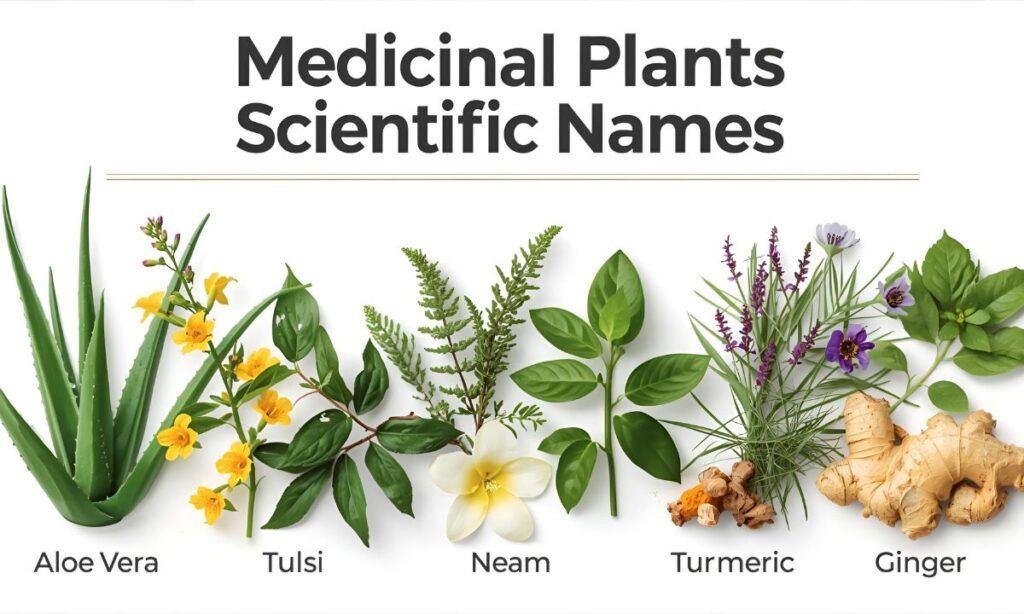
Medicinal plants have treat human ailments for thousands of years. The scientific names of common plants used in medicine are crucial. These herbs contain natural compounds that support health and healing today. Traditional systems like Ayurveda rely heavily on these botanical remedies.
Each medicinal plant has specific therapeutic properties and scientific identification. From turmeric to holy basil, these plants offer natural healthcare solutions. Understanding their botanical names ensures correct usage and proper dosage. Modern research continues to validate traditional uses of medicinal plants.
| Common Name | Scientific Name | Main Use |
| Neem | Azadirachta indica | Antibacterial treatment for skin disorders and excellent oral hygiene |
| Aloe Vera | Aloe barbadensis Miller | Soothing skin burns, digestive support, and natural moisturizing gel |
| Holy Basil (Tulsi) | Ocimum sanctum | Immunity booster, anti-inflammatory properties, and cough cold relief daily |
| Turmeric | Curcuma longa | Powerful anti-inflammatory for wounds and joint pain management naturally |
| Ginger | Zingiber officinale | Digestive system aid, anti-nausea remedy, and inflammation reduction |
| Garlic | Allium sativum | Cardiovascular health support and strong antimicrobial protective properties daily |
| Indian Gooseberry (Amla) | Phyllanthus emblica | Rich vitamin C source boosts immunity and hair skin |
| Fenugreek | Trigonella foenum-graecum | Digestive health aid and milk production increase for mothers |
| Ashwagandha | Withania somnifera | Natural stress relief, energy booster, and improved sleep quality |
| Peppermint | Mentha piperita | Digestive comfort, headache remedy, and effective nasal decongestion relief |
| Cinnamon | Cinnamomum verum | Blood sugar level control and powerful antioxidant health benefits |
| Indian Sarsaparilla | Hemidesmus indicus | Blood purification properties and effective treatment for skin problems |
| Bhringraj | Eclipta alba | Promotes healthy hair growth and supports optimal liver function |
| Brahmi | Bacopa monnieri | Enhances memory function and improves cognitive performance in studies |
| Licorice | Glycyrrhiza glabra | Sore throat remedy, anti-inflammatory agent, and digestive system aid |
| Rose | Rosa spp. | Ornamental elegance and petals used in gentle skincare formulations |
| Sunflower | Helianthus annuus | Heart-healthy oil and nutritious seeds supporting cardiovascular wellness |
| Marigold | Tagetes spp. | Natural insect repellent and ingredient in skin healing creams |
| Jasmine | Jasminum spp. | Aromatic fragrance and stress relief in therapeutic aromatherapy sessions |
| Hibiscus | Hibiscus rosa-sinensis | Hair care treatments and herbal tea for lowering blood pressure |
Indoor Plants Scientific Names

Indoor plants transform living spaces into healthy, beautiful environments naturally. The scientific names of common plants for indoors help identification. These houseplants purify air, reduce stress, and improve overall mood. They thrive in controlled indoor conditions with minimal maintenance requirements.
Each indoor plant species has unique care needs and benefits. From snake plants to peace lilies, scientific names guide proper care. These plants adapt well to low light and irregular watering schedules. Indoor gardening has become popular for urban dwellers seeking greenery.
Don’t Miss: Scientific Name for Pig
| Common Name | Scientific Name | Main Use |
| Snake Plant | Sansevieria trifasciata | Excellent air purifier requiring minimal care and maintenance indoors |
| Spider Plant | Chlorophytum comosum | Effective air purification and an attractive ornamental hanging plant display |
| Peace Lily | Spathiphyllum wallisii | Air cleaning properties and elegant white flowers for decoration |
| Money Plant | Epipremnum aureum | Trailing indoor vine, air purifier, and symbol of prosperity |
| ZZ Plant | Zamioculcas zamiifolia | Drought-tolerant decorative plant perfect for busy homeowners everywhere |
| Areca Palm | Dypsis lutescens | Natural indoor air purifier and humidity enhancer for dry rooms |
| Aloe Vera | Aloe barbadensis Miller | Skin care gel source and treatment for minor burns |
| Boston Fern | Nephrolepis exaltata | Natural air humidifier and effective indoor air cleaning properties |
| Pothos | Scindapsus aureus | Air purifying qualities and an attractive trailing houseplant for shelves |
| Rubber Plant | Ficus elastica | Air purification properties and aesthetic appeal for modern interiors |
| Chinese Evergreen | Aglaonema commutatum | Low light-tolerant decorative plant with attractive variegated foliage patterns |
| Philodendron | Philodendron spp. | Ornamental foliage plant requiring easy care and minimal attention |
| Fiddle Leaf Fig | Ficus lyrata | Trendy decorative plant with large, broad sculptural leaves indoors |
| Croton | Codiaeum variegatum | Bright colorful foliage adds vibrant decoration to any space |
| Prayer Plant | Maranta leuconeura | Unique leaf movement patterns create decorative interest at night |
| Dumb Cane | Dieffenbachia spp. | Large-leafed ornamental plant making bold indoor design statements |
| Jade Plant | Crassula ovata | Succulent décor plant and traditional symbol of wealth and prosperity |
| Peperomia | Peperomia spp. | Compact houseplant with attractive foliage in various colors and patterns |
| Lucky Bamboo | Dracaena sanderiana | Feng shui symbol of luck and prosperity for homes |
| Flamingo Lily | Anthurium andraeanum | Bright flowering indoor plant with long-lasting colorful heart blooms |
Leaf Plants Scientific Name

Leaf plants are grown primarily for their attractive foliage displays. The scientific names of common plants in this category matter. These plants feature colorful, patterned, or uniquely shaped leaves year-round. They add visual interest to gardens and indoor spaces consistently.
Foliage plants require less maintenance than flowering species typically do. From caladiums to ferns, these plants offer diverse aesthetic options. Their scientific names help gardeners select appropriate species for conditions. Leaf plants remain attractive even without blooms throughout the seasons.
| Common Name | Scientific Name | Main Use |
| Caladium | Caladium bicolor | Ornamental foliage with heart-shaped, colorful leaves for shaded gardens |
| Croton | Codiaeum variegatum | Brightly colored decorative leaves add tropical flair to interiors |
| Coleus | Plectranthus scutellarioides | Colorful patterned leaves for vibrant garden beds and borders |
| Fittonia | Fittonia albivenis | Small decorative plant perfect for terrariums and compact spaces |
| Pothos | Epipremnum aureum | Air purifying qualities and extremely easy care trailing vine |
| Snake Plant | Sansevieria trifasciata | Air purification properties with low maintenance upright growth habit |
| Boston Fern | Nephrolepis exaltata | Humidity-loving plant and natural air filtering for indoor environments |
| Syngonium | Syngonium podophyllum | Decorative climbing plant with arrow-shaped leaves for indoor spaces |
| Monstera | Monstera deliciosa | Tropical aesthetic with iconic split leaves for modern interiors |
| Alocasia | Alocasia amazonica | Bold dramatic foliage creates statement pieces in contemporary homes |
| Elephant Ear | Colocasia esculenta | Large ornamental foliage and edible varieties in some cultures |
| Fiddle Leaf Fig | Ficus lyrata | Trendy indoor décor plant with large violin-shaped glossy leaves |
| Spider Plant | Chlorophytum comosum | Hanging plant with arching foliage and excellent air purification |
| Polka Dot Plant | Hypoestes phyllostachya | Bright spotted leaves provide an indoor accent color and interest |
| Wandering Jew | Tradescantia zebrina | Colorful striped trailing plant for hanging baskets and shelves |
| Rubber Plant | Ficus elastica | Low-maintenance decorative plant with thick, glossy, dark green leaves |
| Philodendron | Philodendron spp. | Easy-growing indoor foliage plants in a wide variety and sizes |
| Chinese Evergreen | Aglaonema spp. | Shade-tolerant indoor plant with an attractive patterned, colorful foliage variety |
| Dumb Cane | Dieffenbachia spp. | Lush tropical foliage creates dramatic indoor décor focal points |
| Prayer Plant | Maranta leuconeura | Decorative leaf movement and beautiful patterned foliage for a houseplant |
Shrub and Bush Plants Biological Names

Shrubs and bushes are woody plants smaller than trees naturally. The scientific names of common plants in the shrub category help. These plants work perfectly for landscaping, borders, and ornamental gardens. They produce flowers regularly and adapt to various climate conditions.
Shrubs provide structure, privacy, and beauty to outdoor spaces effectively. From hibiscus to lavender, each species has distinct characteristics today. Their botanical names ensure proper selection for specific landscape needs. These plants thrive in both tropical and temperate climate zones.
| Common Name | Scientific Name | Main Use |
| Hibiscus | Hibiscus rosa-sinensis | An ornamental flowering plant used in hair care and skincare |
| Bougainvillea | Bougainvillea glabra | Decorative climbing vine for fence and wall covering landscapes |
| Hydrangea | Hydrangea macrophylla | Showy ornamental garden displays with large colorful flower clusters |
| Ixora | Ixora coccinea | Decorative hedge plant and attractive landscaping with bright blooms |
| Oleander | Nerium oleander | Ornamental drought-tolerant shrub with beautiful flowers in hot climates |
| Rose Bush | Rosa spp. | Ornamental garden favorite for perfumery and symbolic romantic uses |
| Jasmine Shrub | Jasminum sambac | Fragrant white flowers for religious ceremonies and perfume production |
| Lavender | Lavandula angustifolia | Fragrant flowers for aromatherapy, stress relief, and ornamental gardens |
| Firebush | Hamelia patens | Attracts hummingbirds and pollinators with tubular orange red flowers |
| Butterfly Bush | Buddleja davidii | Attracts butterflies abundantly and creates ornamental flowering displays summer |
| Forsythia | Forsythia spp. | Early spring yellow flowers and an ornamental hedge for borders |
| Barberry | Berberis spp. | Ornamental hedge with thorny protection and colorful fall foliage |
| Camellia | Camellia japonica | Winter-flowering ornamental shrub with elegant blooms in cold weather |
| Gardenia | Gardenia jasminoides | Highly fragrant white flowers and decorative evergreen shrub foliage |
| Azalea | Rhododendron spp. | Vibrant spring-blooming ornamental flowers in various bright colors |
| Boxwood | Buxus sempervirens | Formal hedging plant and topiary sculpting for elegant landscapes |
| Mock Orange | Philadelphus coronarius | Fragrant white orange-scented flowers and ornamental spring blooming use |
| Spirea | Spiraea spp. | Showy spring blooms and ornamental shrubs for landscape borders |
| Winter Daphne | Daphne odora | Fragrant winter flowers and ornamental early-season blooming shrub beauty |
| Currant Bush | Ribes rubrum | Edible tart berries and ornamental foliage for garden landscapes |
How to Identify Plants Using Their Scientific Names
Identifying plants accurately requires understanding their scientific botanical names completely. The scientific names of common plants follow standardized binomial nomenclature rules. This system uses two Latin words: genus name and species name. Learning this method makes plant identification easier across different regions.
Plant identification through scientific names eliminates confusion from local names. Botanists worldwide use the same names regardless of their language. This universal system helps in research, conservation, and horticultural practices. Understanding scientific names opens doors to deeper botanical knowledge today.
Steps for Plant Identification:
- Observe Physical Features: Examine leaf shape, flower color, stem texture, and growth pattern
- Note the Habitat: Identify where the plant grows naturally or thrives best
- Check the Genus: The first capitalized word indicates the plant’s broader group
- Identify the Species: The second lowercase word specifies the exact plant type
- Use Reference Materials: Consult botanical guides, databases, or identification apps regularly
- Compare Multiple Sources: Verify findings across different scientific plant resources available
- Document Your Findings: Take photos and notes for future reference purposes
Don’t Miss: Scientific Name of Dog
Benefits of Learning Botanical Names for Plants
Learning botanical names provides numerous advantages for plant enthusiasts everywhere. The scientific names of common plants enable precise communication globally. These names remain consistent across languages, regions, and time periods. Understanding botanical nomenclature enhances gardening, research, and conservation efforts significantly.
Scientific plant names reveal important information about plant relationships naturally. They help prevent mistakes when purchasing plants or studying them. Gardeners, botanists, and students benefit greatly from botanical knowledge daily. This universal language connects people who love plants worldwide.
Key Benefits:
- Universal Communication: Same names used worldwide eliminating confusion and errors
- Accurate Identification: Precise plant recognition preventing costly cultivation mistakes completely
- Research Access: Easier to find scientific studies and cultivation information
- Conservation Awareness: Better understanding of endangered species and protection needs
- Garden Planning: Select compatible plants based on genus and species
- Professional Credibility: Demonstrates expertise in horticulture and botanical fields clearly
- Educational Value: Deepens understanding of plant evolution and classification systems
Final Word
The scientific names of common plants provide essential botanical knowledge worldwide. Understanding these Latin names helps with accurate plant identification today. From trees to flowers, each plant has a unique name. This system supports research, education, and conservation efforts globally effectively.
Learning botanical nomenclature benefits gardeners, students, and nature enthusiasts greatly. These standardized names eliminate confusion caused by regional common names. Whether growing indoor plants or studying medicinal herbs, scientific accuracy matters. Continue exploring the fascinating world of plant taxonomy and diversity.
Frequently Asked Questions
What are scientific names of common plant examples?
Examples include Mangifera indica for mango, Rosa spp. for rose, Aloe barbadensis for aloe vera, and Azadirachta indica for neem tree across the world.
Why do we use scientific names for plants?
Scientific names of common plants create universal identification standards eliminating confusion from regional names ensuring accurate communication worldwide among botanists researchers and gardeners today.
How do you write plant scientific names correctly?
Write the genus name capitalized and species name lowercase in italics, such as Ficus religiosa for peepal tree or Mangifera indica for mango tree properly.
What is the difference between common and scientific names?
Common names vary by region and language, while scientific names of common plants remain consistent worldwide using standardized Latin binomial nomenclature for clarity.
Can one plant have multiple scientific names?
Generally no, each plant has one accepted scientific name, though synonyms may exist from historical classifications being updated over time by botanists worldwide.
Where can I find scientific names for plants?
Find scientific names of common plants on botanical websites, plant identification apps, scientific databases, and educational resources like ScientificNamea.com for accurate information.
What does “spp.” mean in plant names?
The abbreviation “spp.” means species plural, indicating multiple species within the same genus like Rosa spp. Representing all rose species together.
Are scientific plant names always in Latin?
Yes, scientific names of common plants use Latin or Latinized words following international botanical nomenclature rules established by scientists for standardization worldwide.
How do botanical names help in gardening?
Botanical names ensure you purchase the correct plant variety, understand care requirements, and find accurate growing information from reliable sources easily.
Who decides the scientific names of plants?
The International Code of Botanical Nomenclature governs naming rules, and botanists propose names following strict guidelines for scientific names of common plants globally.

David is a naming expert with 2 years of experience at NamesSelections.com, specializing in name meanings, team names, baby names, and unique name ideas. His insights guide readers to choose meaningful and powerful names for every occasion.