
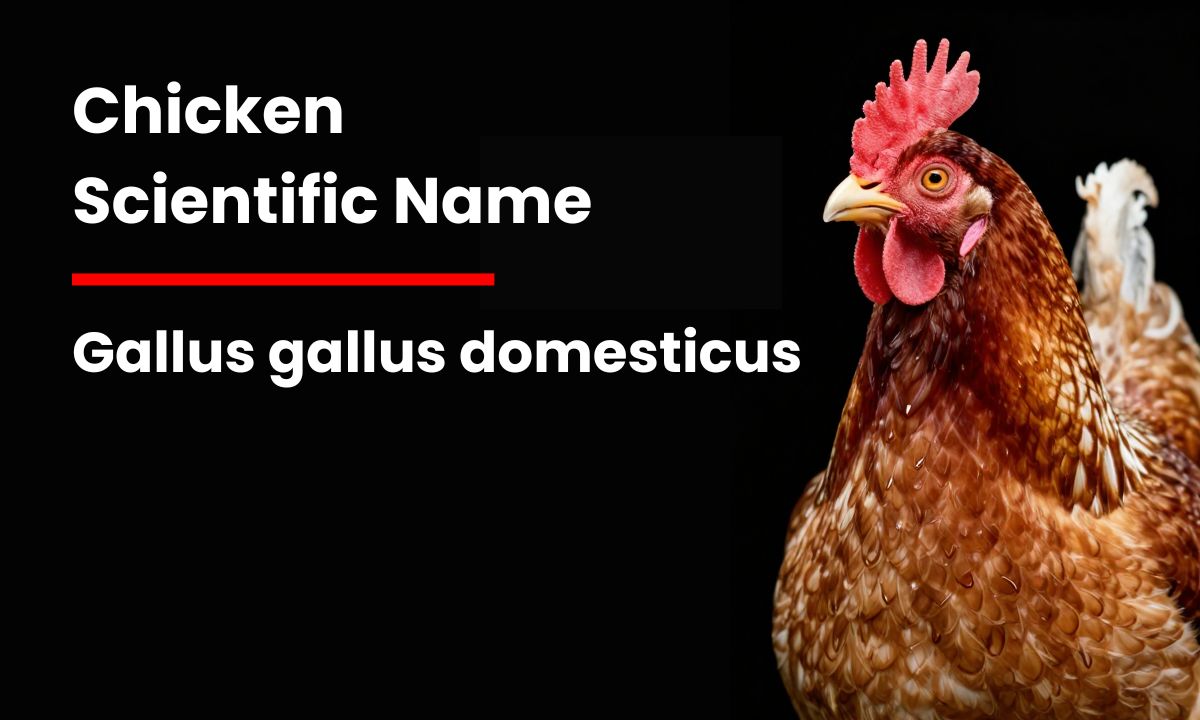

Chicken scientific name is known as Gallus gallus domesticus worldwide. This scientific classification helps researchers and farmers identify chickens accurately everywhere. Understanding the biological name makes communication easier across different languages and regions. The scientific naming system provides a universal standard for poultry identification.
Many people raise chickens for egg and meat production purposes. However, most chicken owners don’t know the proper scientific terminology. Learning about chicken scientific name helps understand their biological classification better. This knowledge connects domestic birds to their wild jungle ancestors clearly.
The study of chicken classification reveals fascinating evolutionary connections and relationships. Modern chickens descended from wild red junglefowl found in Southeast Asia. Scientists use the scientific name to track genetic variations properly. This systematic approach helps preserve different breeds and maintain genetic diversity.
What is the scientific name for a Hen?
The biological name for hens and chickens is Gallus gallus domesticus. This Latin term follows the international system of scientific nomenclature worldwide. Scientists created this naming system to avoid confusion across different languages. The chicken scientific name remains constant regardless of local or regional names.
The word Gallus means rooster or male chicken in ancient Latin. The term domesticus indicates that humans have domesticated this bird species. Together, these words show the chicken’s relationship to wild red junglefowl. The complete name tells the story of domestication and evolutionary history.
Understanding the Latin terminology helps explain chicken origins and relationships:
- Gallus refers to the genus of junglefowl bird species
- The second Gallus indicates the specific red junglefowl wild ancestor
- Domesticus shows human domestication over thousands of years
- Both hens and roosters share the same chicken scientific name
- Female and male chickens have identical biological classification systems
Don’t Miss: Cow Scientific Name
Scientific Classification of Chicken And its Species
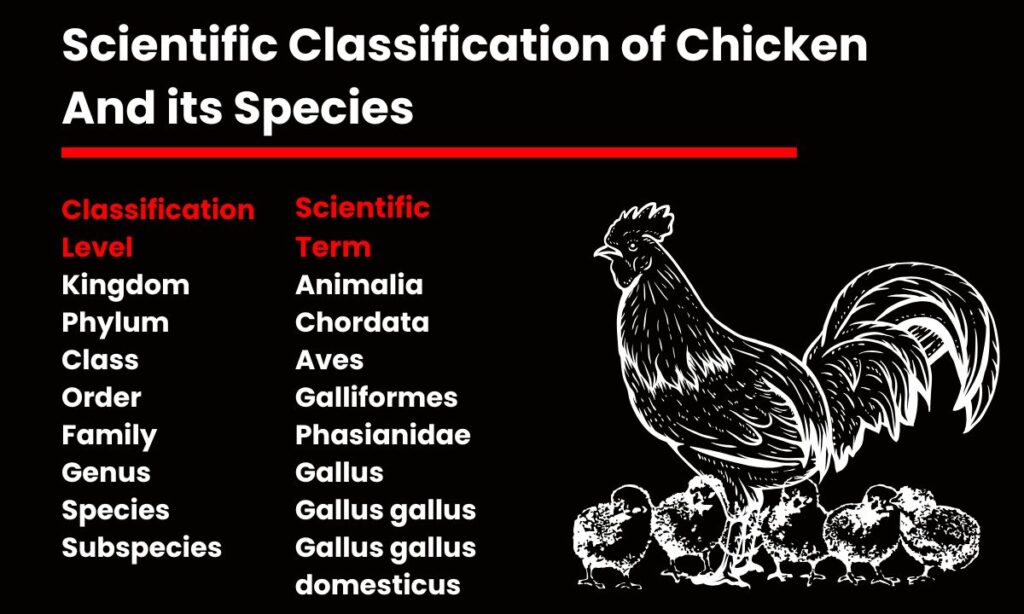
The complete taxonomic classification places chickens within the animal kingdom properly. This hierarchical system organizes all living organisms from broad to specific. Understanding where chickens fit helps scientists study their relationships with others. The chicken scientific name represents the most specific level of classification.
| Classification Level | Scientific Term |
| Kingdom | Animalia |
| Phylum | Chordata |
| Class | Aves |
| Order | Galliformes |
| Family | Phasianidae |
| Genus | Gallus |
| Species | Gallus gallus |
| Subspecies | Gallus gallus domesticus |
Understanding Chicken Scientific Name
Many people wonder if roosters have different scientific names from hens. The answer is no because both belong to the same species classification. Male and female chickens share the chicken scientific name completely. This unified naming system prevents confusion in research and agricultural documentation.
The term hen specifically refers to female chickens in everyday language. However, scientific classification doesn’t separate males and females into different species. Both roosters and hens are classified as Gallus gallus domesticus. This standardization helps veterinarians, breeders, and researchers communicate effectively worldwide.
Key Points About Chicken Scientific Naming:
The chicken scientific name for all domestic chickens is Gallus gallus domesticus. The hen scientific name remains the same as roosters. Both male and female birds share identical biological classification across studies. This universal system eliminates regional confusion and language barriers.
Why Use Biological Names of Chicken?
Chickens have many different common names across various regions worldwide. In Australia, people call chickens “chooks” while Americans say “roosters” informally. These regional differences can create confusion in scientific research and communication. The chicken scientific name provides one universal term everyone can understand.
Scientific names prevent misunderstandings between researchers, veterinarians, and farmers from different countries. Using Gallus gallus domesticus ensures everyone discusses the same bird species. This standardization improves accuracy in medical records and breeding documentation significantly. The universal naming system makes international collaboration much easier and effective.
The chicken scientific name also helps organize vast amounts of research data. Scientists can quickly find relevant studies about Gallus gallus domesticus. This systematic approach saves time and improves the quality of research. Proper classification enables better disease tracking and conservation efforts for poultry.
Why the Scientific Classification of Chickens is Important
Scientific classification reveals important evolutionary relationships between chickens and other birds. This system shows how chickens connect to turkeys, quails, and pheasants. Understanding these relationships helps scientists study disease patterns across similar species. The chicken scientific name anchors all this research in the proper context.
Classification systems help researchers study diseases affecting birds in the Galliformes order. When scientists identify diseases in chickens, they can predict risks in related species. This knowledge improves prevention strategies and treatment development for poultry diseases. Proper classification saves lives and protects agricultural investment in farming.
Don’t Miss: scientific name of frog
Important Benefits of Scientific Classification:
- Shows evolutionary connections between chickens and wild junglefowl species clearly
- Helps veterinarians identify and treat diseases affecting similar bird families
- Supports conservation programs for endangered wild relatives of domestic chickens
- Improves breeding programs by understanding genetic relationships and diversity patterns
- Enables better farming practices through comparative studies with related species
The chicken scientific name creates a foundation for all poultry research. Scientists worldwide can share findings about Gallus gallus domesticus without confusion. This collaborative approach advances veterinary medicine, nutrition science, and breeding techniques. Proper classification ultimately benefits both chickens and the people who raise them.
Most common breeds of chickens
Hundreds of chicken breeds exist worldwide despite sharing one scientific name. Different breeds have been developed for specific purposes, like egg production. Some chickens are raised primarily for meat, while others are ornamental. All these diverse breeds belong to the Gallus gallus domesticus classification system.
Selective breeding over centuries created an amazing variety in size, color, and behavior. Farmers developed breeds suited to different climates and farming systems worldwide. Despite visible differences, all domestic chickens share the same scientific classification. The chicken scientific name unifies all these varieties under one species.
Popular Chicken Breeds and Their Primary Uses:
- Leghorn chicken scientific name remains Gallus gallus domesticus, famous for egg production
- Rhode Island Red chicken scientific name is identical, dual-purpose for eggs and meat
- Brahma chicken scientific name stays the same, a large breed primarily for meat
- Silkie chicken scientific name remains unchanged, known for its ornamental soft, fluffy feathers
- Plymouth Rock chicken scientific name is identical, excellent dual-purpose heritage breed
- White Leghorn chicken consistent scientific name, the highest egg production, commercial breed
- Cornish chicken scientific name remains the same, primarily used for meat production
- Sussex chicken scientific name unchanged, versatile dual-purpose heritage breed
- Cochin chicken scientific name identical, large ornamental birds with feathered legs
- Polish chicken scientific name consistent, ornamental breed with distinctive crest feathers
Every chicken breed shares the same biological foundation despite their differences. The chicken scientific name Gallus gallus domesticus, applies to all domestic varieties. Understanding this unity helps breeders maintain genetic diversity and health standards. Proper classification ensures accurate record keeping across the global poultry industry.
Origin and Evolution of the Chicken Species
Domestic chickens descended from red junglefowl living in Southeast Asian forests. Wild Gallus gallus still inhabit tropical regions of Thailand, Indonesia, and India. Ancient humans first domesticated these wild birds approximately eight thousand years ago. The chicken scientific name reflects this evolutionary journey from wild to domestic.
Archaeological evidence shows chickens spread from Southeast Asia to China and India. These birds traveled along ancient trade routes reaching Europe and Africa eventually. Chickens adapted to diverse climates and human farming systems across continents. Today, over 26.5 billion chickens live worldwide in various environments successfully.
The domestication process changed chickens significantly from their wild jungle ancestors. Modern chickens are larger, lay more eggs, and grow faster than junglefowl. Humans selected birds with desirable traits over thousands of generations carefully. Despite these changes, the scientific name connects domestic birds to their ancestors.
Difference Between Wild Junglefowl and Domestic Chicken
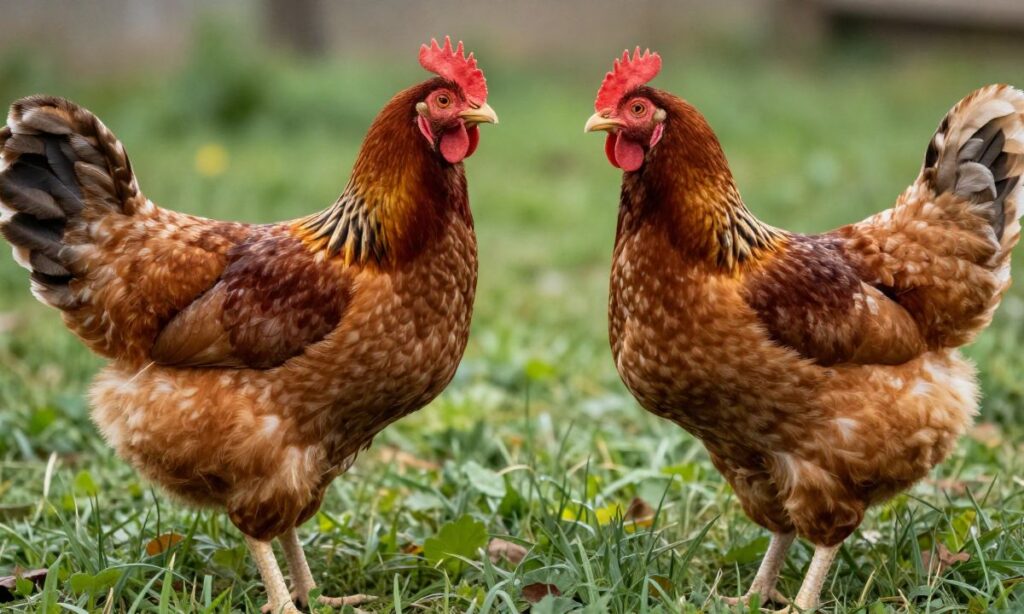
Wild red junglefowl and domestic chickens share the same species classification. However, domestication created significant physical and behavioral differences between them today. Wild junglefowl can fly well, while most domestic chickens cannot fly. The chicken scientific name encompasses both wild and domestic forms equally.
| Characteristic | Wild Red Junglefowl | Domestic Chicken |
| Scientific Name | Gallus gallus | Gallus gallus domesticus |
| Flight Ability | Strong fliers, roosting in trees | Limited flight, heavy body weight |
| Egg Production | 10-15 eggs per year | 200-300+ eggs annually |
| Body Size | Smaller, leaner, athletic build | Larger, heavier, varied sizes |
| Behavior | Shy, wary, wild instincts | Docile, adapted to humans |
| Breeding Season | Specific seasonal breeding | Year-round breeding capability |
| Lifespan | 5-7 years in the wild | 5-10 years domestically |
| Meat Production | Minimal meat on frame | Heavy meat production breeds |
Don’t Miss: Scientific Name Of Donkey
Uses of Chicken in Agriculture and Human Life
Chickens serve multiple important purposes in agriculture and human society today. Over 50 billion chickens are raised annually for meat and eggs. These birds provide affordable protein to billions of people across the globe. The chicken scientific name represents one of humanity’s most successful domestication stories.
Primary Uses of Domestic Chickens in Modern Society:
- Egg production with specialized layer hens producing over 300 eggs yearly
- Meat production through broiler breeds reaches market weight within six weeks
- Pest control, as chickens eat insects, slugs, and garden pest species
- Fertilizer production through nutrient-rich manure for gardens and farms
- Scientific research as model organisms to study embryonic development and genetics
- Pet companionship with friendly breeds is becoming popular in urban backyards
- Cultural significance in religious ceremonies, folklore, and traditional practices worldwide
- Educational purposes, teaching children about animal care and food production
- Therapeutic animals provide emotional support and stress relief for people
- Cockfighting sports are practiced in some regions despite ethical concerns and legal restrictions
Last Words
The chicken scientific name Gallus gallus domesticus, unifies all domestic chickens. This universal classification system helps scientists, farmers, and veterinarians communicate effectively. Understanding proper biological naming improves research, breeding programs, and conservation efforts. The scientific approach connects modern chickens to their wild jungle ancestors.
Learning about chicken classification reveals a fascinating evolutionary history and human relationships. From ancient Southeast Asian forests to modern farms, chickens have transformed significantly. Despite tremendous diversity in breeds and appearances, all share one name. The chicken scientific name represents humanity’s successful partnership with these remarkable birds.
Frequently Asked Questions
What is the chicken scientific name?
The chicken scientific name is Gallus gallus domesticus for all domestic breeds worldwide.
What is the Plymouth Rock chicken scientific name?
Plymouth Rock chicken scientific name remains Gallus gallus domesticus, like all chicken breeds.
What is the Silkie chicken scientific name?
The Silkie chicken scientific name is Gallus gallus domesticus despite its unique feather characteristics.
What is the Rhode Island Red chicken scientific name?
Rhode Island Red chicken scientific name stays Gallus gallus domesticus across all populations.
What is the Brahma chicken scientific name?
Brahma chicken scientific name is Gallus gallus domesticus regardless of large body size.
What is the Leghorn chicken scientific name?
The Leghorn chicken scientific name remains Gallus gallus domesticus for all color varieties.
What is the broiler chicken scientific name?
Broiler chicken scientific name Gallus gallus domesticus even used for commercial meat production.
What is the bantam chicken scientific name?
Bantam chicken scientific name stays Gallus gallus domesticus despite its miniature breed size.
What is the Polish chicken scientific name?
Polish chicken scientific name remains Gallus gallus domesticus with distinctive crest feathers.
What is the White Leghorn chicken scientific name?
White Leghorn chicken scientific name is Gallus gallus domesticus for egg production breeds.

David is a naming expert with 2 years of experience at NamesSelections.com, specializing in name meanings, team names, baby names, and unique name ideas. His insights guide readers to choose meaningful and powerful names for every occasion.