
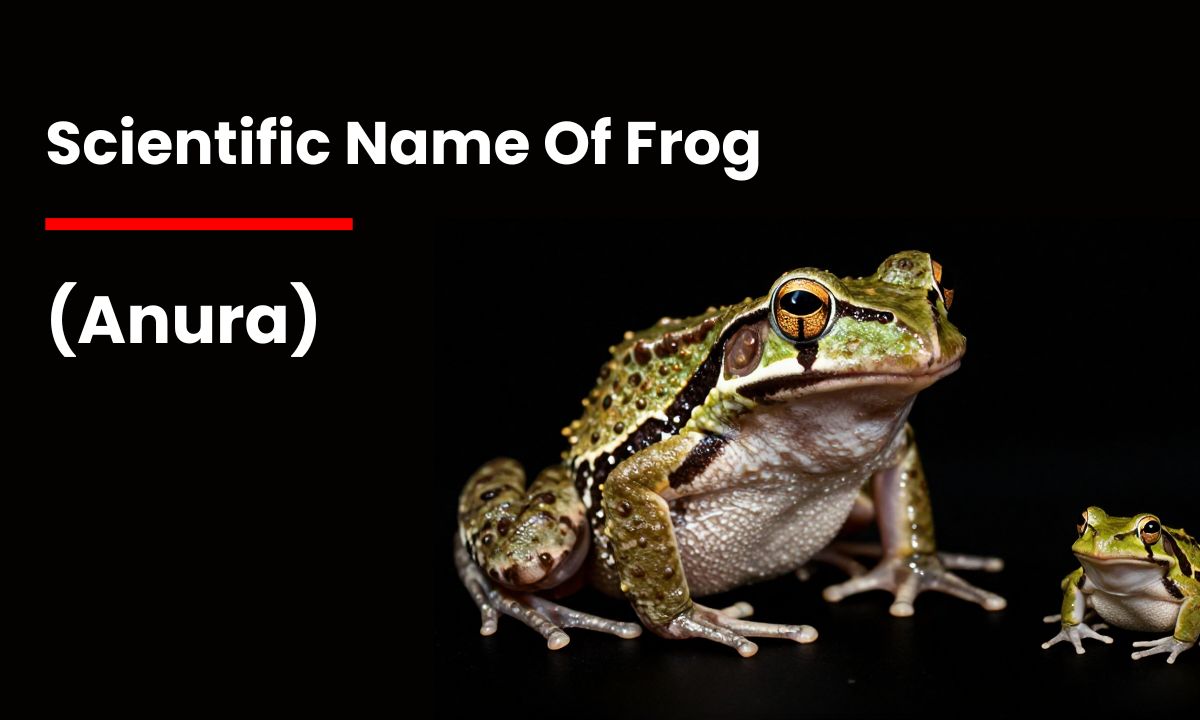

Scientific name of frog is essential for proper identification worldwide. Frogs belong to the order Anura within the amphibian class today. Scientists use these names to classify thousands of frog species accurately. Understanding the scientific name of frog helps in conservation and research.
The biological naming system follows strict international rules for classification purposes. Every frog species receives a unique two-part Latin name globally. The scientific name of a frog distinguishes it from other species. This system prevents confusion when scientists discuss different frog types anywhere.
Frogs have existed on Earth for over 200 million years now. Their scientific names reflect evolutionary relationships and physical characteristics accurately. The scientific name of frog changes when new research reveals better. Modern DNA testing helps scientists classify amphibians more precisely than before.
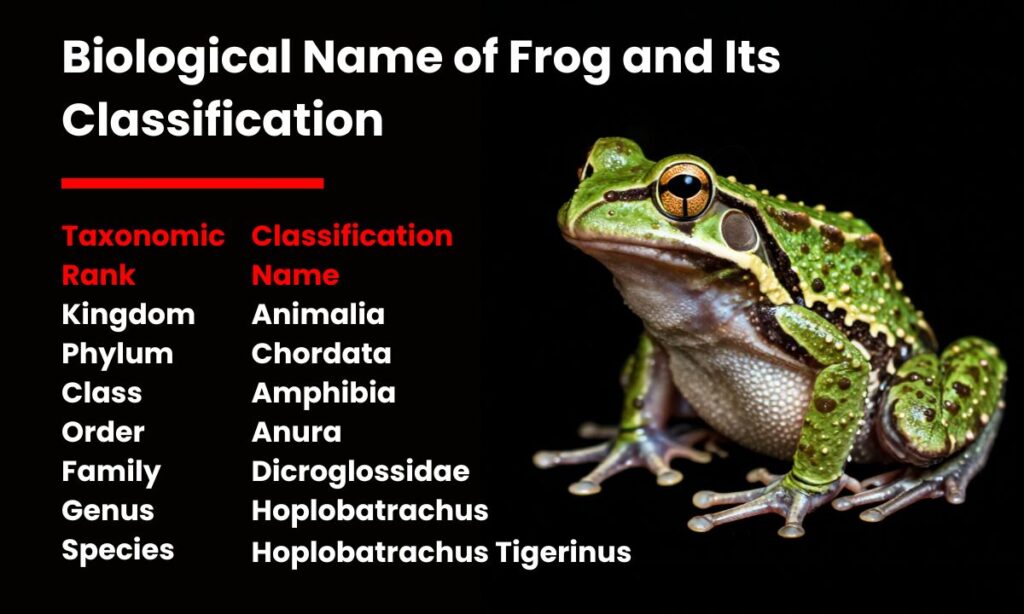
Biological Name of Frog and Its Classification
The scientific name of frog follows the binomial nomenclature system perfectly. This classification method was developed by Carl Linnaeus in taxonomy. Every species gets two names, including genus and species identifiers. The biological name of frog ensures universal understanding among scientists globally.
Taxonomic classification places frogs within specific hierarchical categories for organization. Each level from kingdom to species narrows down the classification. The scientific name of a frog represents its evolutionary position clearly. This systematic approach helps researchers study amphibian diversity and relationships effectively.
Complete Taxonomic Classification of Frog:
| Taxonomic Rank | Classification Name |
| Kingdom | Animalia |
| Phylum | Chordata |
| Class | Amphibia |
| Order | Anura |
| Family | Dicroglossidae |
| Genus | Hoplobatrachus |
| Species | Hoplobatrachus tigerinus |
Don’t Miss: 150 Animals Scientific Names
Scientific Name of Frog in Biology
The scientific name of frog in biology identifies specific species. Hoplobatrachus tigerinus is the most commonly referenced biological name today. This scientific name replaced the older classification Rana tigrina recently. Molecular studies revealed the need for reclassification in modern taxonomy.
Common Scientific Names of Popular Frog Species:
| Common Name | Scientific Name | Geographic Location |
| Indian Bullfrog | Hoplobatrachus tigerinus | South Asia |
| Common Frog | Rana temporaria | Europe |
| American Bullfrog | Lithobates catesbeianus | North America |
| Tree Frog | Hyla cinerea | United States |
| African Clawed Frog | Xenopus laevis | Southern Africa |
| Poison Dart Frog | Dendrobates tinctorius | South America |
The scientific name of frog genus and species varies greatly. Each species name describes unique characteristics or honors notable scientists. The biological naming system maintains consistency across all scientific literature. This standardization allows researchers worldwide to communicate effectively about frog species.
History of the Frog Scientific Name
The scientific name of the frog has evolved through centuries of study. Early naturalists classified amphibians based only on physical appearance. The genus Rana was one of the earliest frog classifications. Scientists originally placed many frog species under this single genus name.
Rana tigrina was the accepted scientific name of frog previously. This name referred specifically to the Indian bullfrog species commonly. The genus name Rana means frog in the Latin language traditionally. The species name tigrina refers to the tiger-like striped pattern.
Modern genetic research has changed how scientists classify frog species dramatically. DNA sequencing revealed that many Rana species needed reclassification urgently. The scientific name of frog Rana tigrina became Hoplobatrachus tigerinus officially. This change reflected more accurate evolutionary relationships among amphibian species.
Why is the Scientific Name of the Frog Important?
The scientific name of frog serves multiple critical purposes in science. Common names vary by region and language causing confusion often. Scientific names provide universal identification regardless of local language differences. This standardization enables effective communication among international researchers and conservationists.
Key Importance of Scientific Names:
- Species Identification: The scientific name of a frog distinguishes it from similar looking species preventing misidentification errors
- Conservation Efforts: Accurate naming helps protect endangered frog species and their natural habitats effectively worldwide
- Medical Research: Many frog species produce compounds valuable for pharmaceutical drug development and disease treatment
- Ecological Studies: Scientists track population changes and study environmental impacts using precise scientific names consistently
- Educational Value: Students and researchers learn about amphibian diversity through standardized scientific classification systems globally
Difference Between Frog Common Name and Scientific Name

Common names change across different regions and languages causing confusion. The scientific name of the frog remains constant worldwide always. This difference creates challenges when discussing species without scientific names.
Comparison of Common Names and Scientific Names:
| Common Name | Scientific Name | Alternative Common Names |
| Indian Bullfrog | Hoplobatrachus tigerinus | Asian Bullfrog, Tiger Frog |
| American Bullfrog | Lithobates catesbeianus | Giant Frog, Bull Frog |
| Common Frog | Rana temporaria | European Common Frog, Grass Frog |
| Green Tree Frog | Hyla cinerea | American Green Tree Frog |
| Wood Frog | Lithobates sylvaticus | Woodland Frog, Forest Frog |
Don’t Miss: Scientific Name of Dog
Different Species of Frogs and Their Scientific Names
Over 7,000 frog species exist worldwide with unique scientific names. Each species receives its own distinct two-part Latin identifier. The scientific name of frog species reflects evolutionary history accurately.
Scientific Names of Notable Frog Species:
| Species Type | Scientific Name | Habitat Region |
| Bull Frog | Lithobates catesbeianus | North America |
| Leopard Frog | Lithobates pipiens | North America |
| Wood Frog | Lithobates sylvaticus | North America |
| Red-Eyed Tree Frog | Agalychnis callidryas | Central America |
| Glass Frog | Centrolenidae family | South America |
| Purple Frog | Nasikabatrachus sahyadrensis | India |
| Rice Field Frog | Fejervarya limnocharis | Southeast Asia |
| Giant Philippine Frog | Limnonectes magnus | Philippines |
Habitat and Behavior of Frogs
Frogs inhabit diverse ecosystems from tropical rainforests to desert regions. The scientific name of frog often hints at habitat preferences. Each species has adapted to specific environmental conditions over time.
Common Frog Habitats:
- Rainforests: Tropical frogs thrive in humid warm environments with abundant vegetation and rainfall throughout year
- Freshwater Bodies: Many frog species live near ponds, lakes, rivers, and streams for breeding purposes primarily
- Desert Regions: Some specialized frogs survive in arid climates by burrowing underground during hot seasons
- Wetlands: Marshes and swamps provide ideal breeding grounds for numerous amphibian species worldwide today
- Forest Floors: Woodland frogs hide under leaves and logs avoiding predators while hunting insects
How Scientists Determine the Frog Scientific Name
Scientists use multiple methods to assign the scientific name of frog. Physical characteristics provide initial clues about species classification and relationships. Modern technology has revolutionized how researchers identify and classify amphibians.
Methods for Determining Scientific Names:
- Morphological Analysis: Scientists examine body structure, skin texture, coloration patterns, and size measurements carefully
- Genetic Sequencing: DNA analysis reveals evolutionary relationships confirming or changing previous frog classifications accurately
- Behavioral Studies: Breeding calls, mating habits, and territorial behaviors help distinguish closely related species
- Geographic Distribution: Location data helps scientists understand species boundaries and identify unique populations
- Fossil Records: Paleontological evidence provides insights into evolutionary history and ancestral frog relationships
Is There One Scientific Name for All Frogs?

No single scientific name covers all frog species existing today. The order Anura includes all frogs and toads collectively worldwide. Each individual species within Anura has its own unique name. The scientific name of a frog is specific to that species.
Scientists have identified over 7,000 distinct frog species currently worldwide. New species continue to be discovered in remote rainforest regions. The scientific name of frog changes only for specific reclassified species. Most species maintain their original names unless genetic research proves otherwise.
Common misconceptions suggest all frogs share one universal scientific name. The reality is that frog diversity requires thousands of names. The scientific name of the frog depends entirely on species identification. This diversity reflects millions of years of amphibian evolution globally.
Don’t Miss: Scientific Names of Common Plants
Amazing Facts About Frogs
Frogs display remarkable characteristics that fascinate scientists and nature enthusiasts. The scientific name of frog species often reflects these unique features. These amphibians have evolved incredible survival adaptations over millions of years.
Fascinating Frog Facts:
- Ancient Lineage: Frogs have existed for approximately 200 million years surviving major extinction events
- Freezing Survival: Wood frogs can freeze solid during winter and thaw back to life
- Toxic Defense: Poison dart frogs secrete deadly toxins through their colorful skin
- Vocal Power: Male coqui frogs produce calls reaching 100 decibels in volume
- Size Extremes: The Goliath frog weighs up to 7 pounds while the smallest measures 7.7 millimeters
- Breathing Ability: Frogs can absorb oxygen through their skin while underwater or hibernating
Last Words
The scientific name of frog provides essential information for research and conservation. Understanding amphibian taxonomy helps protect these vital ecosystem members effectively. Scientists continue discovering new species requiring proper classification and documentation. The biological naming system ensures clear communication across all scientific disciplines.
Frogs play crucial roles in maintaining ecological balance within their habitats. Their scientific names help researchers track population changes and threats. The scientific name of a frog connects us to biodiversity worldwide. Preserving these species and their habitats remains critical for future generations.
Frequently Asked Questions
What is the most common scientific name of frog?
Hoplobatrachus tigerinus is the scientific name for the Indian bullfrog species.
How many frog species have scientific names today?
Scientists have identified and named over 7,000 distinct frog species worldwide currently.
Why did the scientific name of frog change from Rana?
Genetic research showed Rana tigrina belonged to a different genus called Hoplobatrachus.
Does every frog have a unique scientific name?
Yes, each frog species receives its own distinct two-part Latin scientific name.
What does the scientific name of frog mean in Latin?
Scientific names describe characteristics, honor scientists, or indicate geographic origin of species.
Can the scientific name of frog be changed later?
Yes, new research and genetic studies can lead to reclassification of species.
Who decides the scientific name of frog species?
International taxonomic authorities and researchers follow strict naming rules for classification purposes.
Is the scientific name of frog the same worldwide?
Yes, scientific names remain constant across all countries and languages for consistency.
What is the scientific name of frog discovered by Rizal?
Jose Rizal discovered three frog species including Platymantis hazelae in the Philippines.
How do you write the scientific name of frog correctly?
Scientific names are written in italics with genus capitalized and species lowercase.

David is a naming expert with 2 years of experience at NamesSelections.com, specializing in name meanings, team names, baby names, and unique name ideas. His insights guide readers to choose meaningful and powerful names for every occasion.